
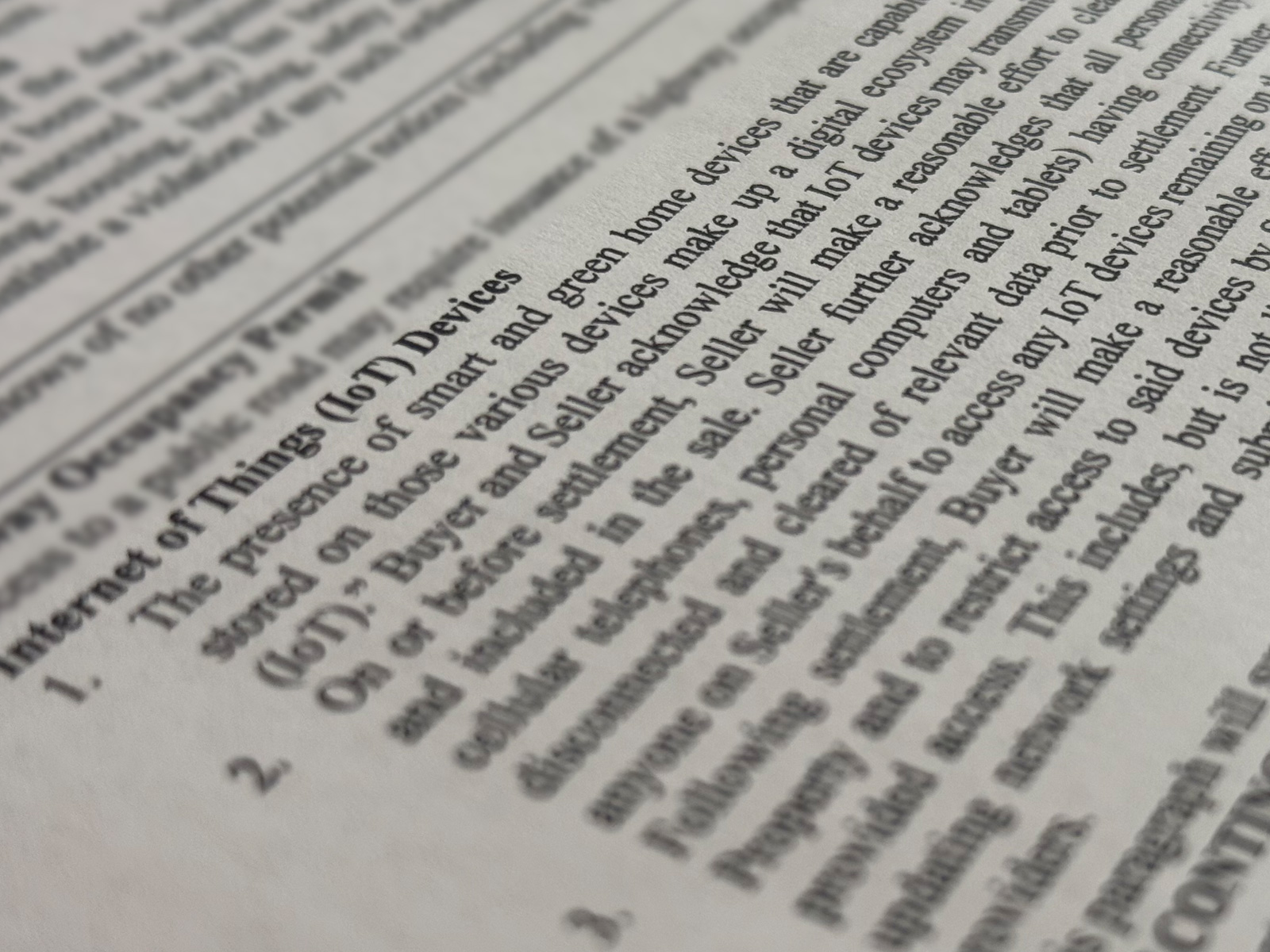
In today’s rapidly evolving smart home market, connected devices are no longer a luxury—they are an expectation. Yet, when a home changes hands, there is often no clear process for transferring ownership of these devices, leaving realtors, sellers, and buyers vulnerable to cybersecurity risks and potential legal disputes. The IoT clause in real estate contracts is meant to address this, but its language is often ambiguous, leading to increased litigation risk.
The Problem: No Standardized Smart Device Transition Process
Most real estate agents and brokers operate under contracts that lack a standardized smart device transition process. This ambiguity creates uncertainty about ownership, access rights, and security responsibilities post-sale. If a seller fails to revoke access to a smart lock, security system, or thermostat, the buyer could find themselves at risk—both financially and from a privacy standpoint. Likewise, a seller could face legal liability if they retain unintended control over devices after closing.
CleanSL8’s Solution: A Structured, Defensible SDF Ownership Transition Plan
CleanSL8 introduces the Smart Device Fixture (SDF) Ownership Transition Plan, a structured and legally defensible solution ensuring compliance for all parties involved. This plan eliminates guesswork by establishing a clear, standardized handoff process, guaranteeing that:
✅ The seller properly revokes access to all smart devices.
✅ The buyer receives 100% ownership and control over their high-value smart home technology.
✅ Realtors and brokers are protected from post-sale legal disputes stemming from unresolved IoT issues.
Why This Matters to Real Estate Professionals
Buyers today are investing thousands of dollars into smart home technology and expect seamless ownership upon closing. Failing to implement a structured transition plan not only compromises security but also erodes trust in the real estate process. The future of real estate transactions must include smart device ownership as a critical component, and CleanSL8 is leading the charge to make this a standard industry practice.